












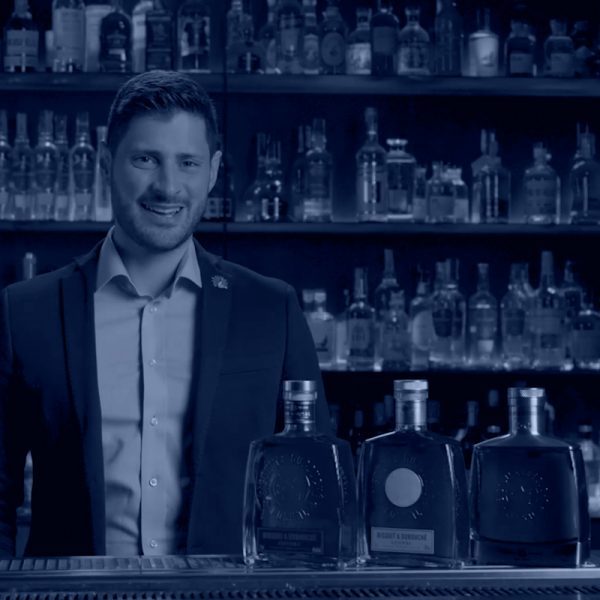
Drink Like a Local: Osaka with Hiro Nakayama
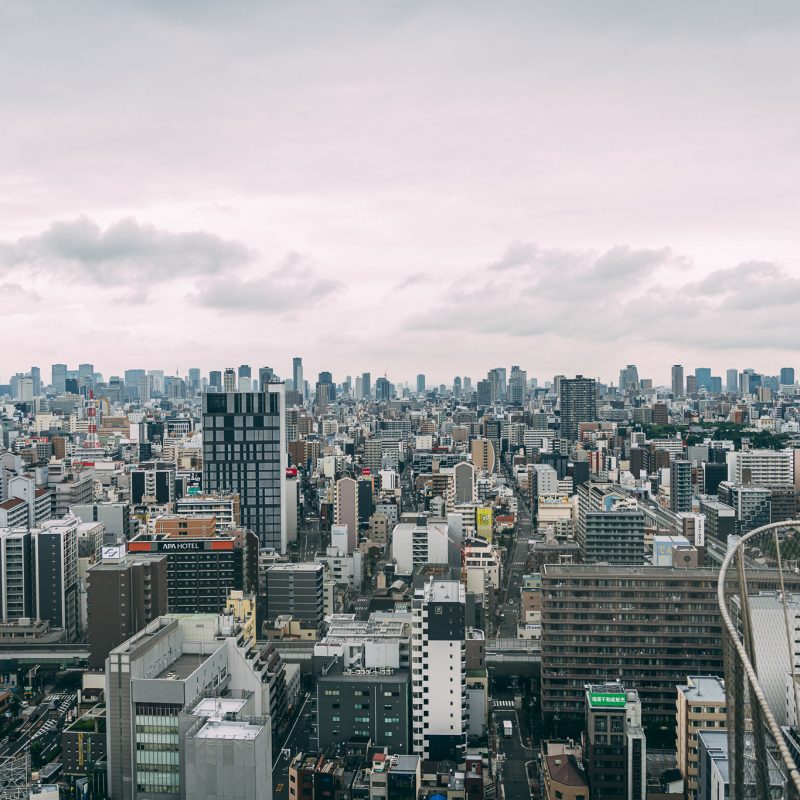
Explore Osaka with Hiro Nakayama, where humor and flavor collide in crowded alleyways, food and drinks are never separated, and the city’s restless energy reveals itself one conversation at a time.
Osaka is often described as Japan’s most approachable city, but that simplicity hides a complex rhythm shaped by food, laughter, and constant human exchange. It is loud without being overwhelming, chaotic without losing its balance, and deeply social in a way that feels immediate and unfiltered. Street vendors call out to passersby, office workers gather shoulder to shoulder at standing bars, and conversations move quickly from polite introductions to shared jokes.
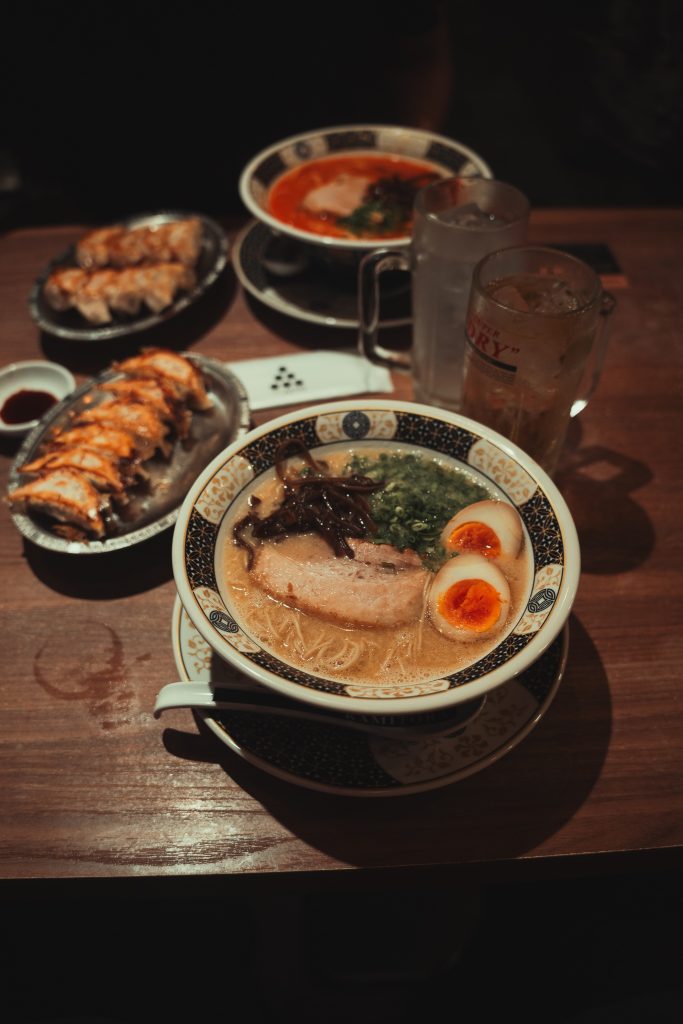
Known as “the Kitchen of Japan,” Osaka’s identity is inseparable from its food culture. Eating is not a pause between activities; it is the activity. From street snacks eaten at midnight to bowls of ramen that close out long nights, the city moves to a culinary rhythm that pulls people together. Drinks follow naturally, flowing alongside food rather than standing apart from it.
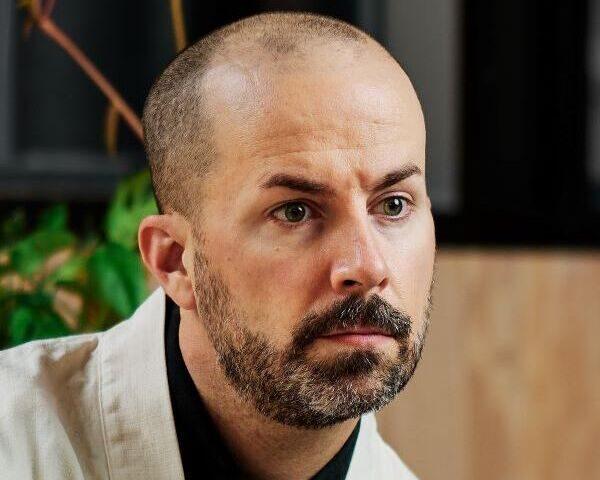
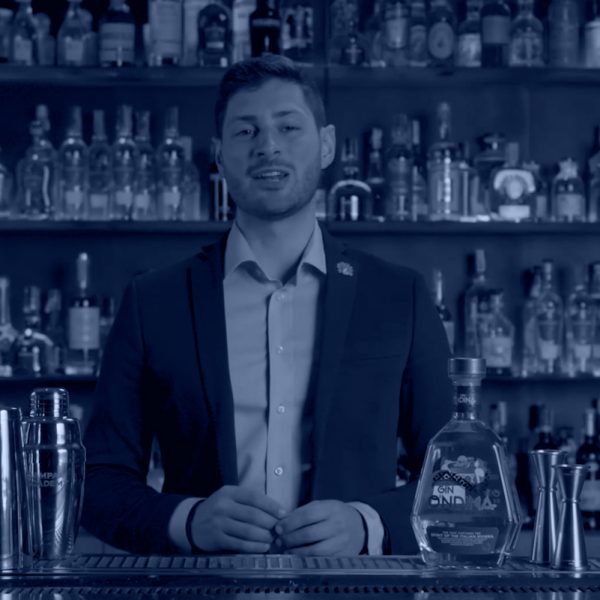
This is a city best understood at counter height. Osaka’s bar culture thrives in small rooms, narrow staircases, and hidden basements where the focus is not spectacle, but presence. It is here that Hiro Nakayama has spent much of his life, building his career and community in Osaka Minami, the southern heart of the city’s nightlife. Having lived here for roughly half his life, Osaka is not just a workplace for him, but home.
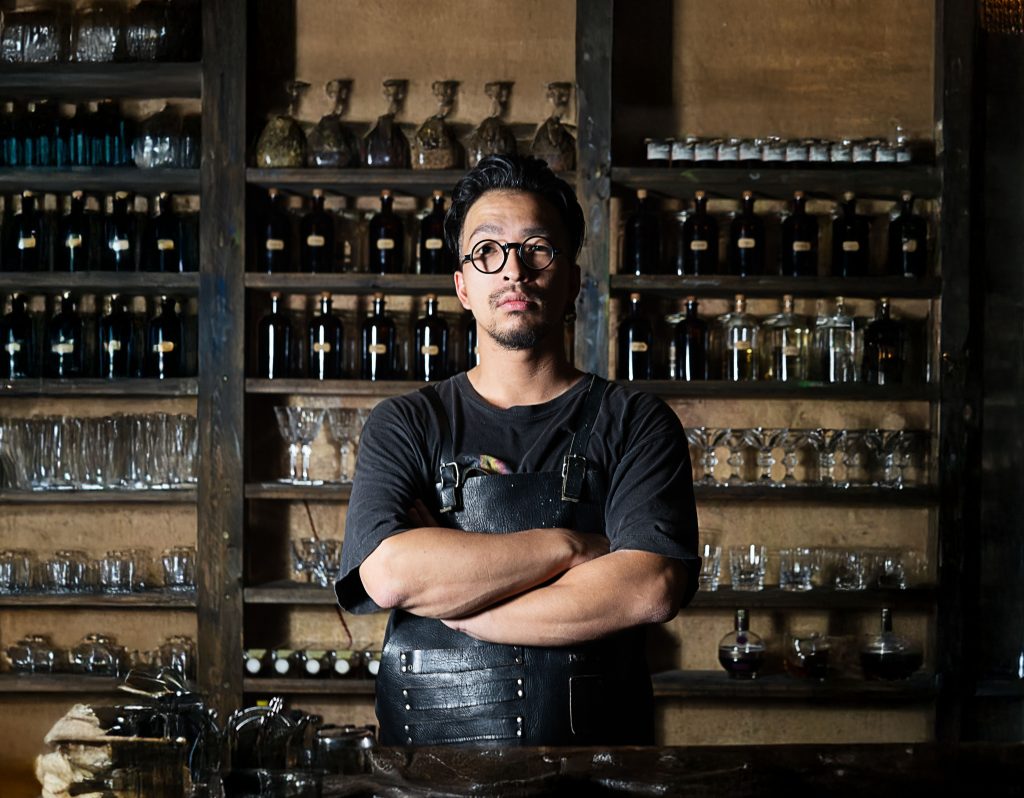
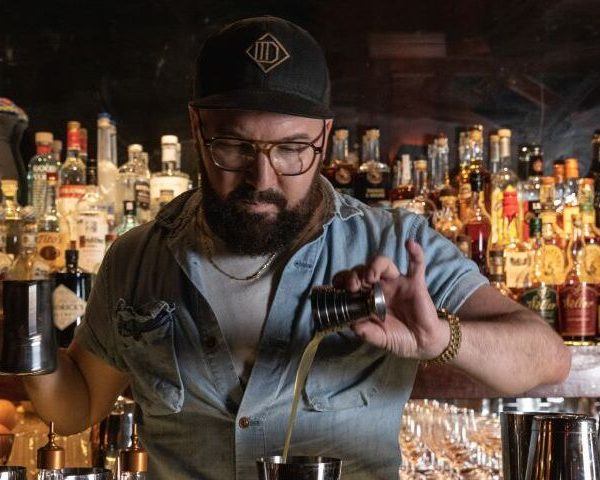
Hiro Nakayama runs several bars in Osaka, including Bar Nayuta, Third Place Bar Fizz, and Karuda, operating under multiple corporations while remaining closely involved in the daily reality of bar life. Alongside his work as an operator, he has also served as the Japan brand ambassador for Maison Villevert since 2021, connecting global spirits culture with Japan’s local drinking traditions.
His bartending career began in Osaka, and over time, professional relationships naturally evolved into something deeper. Many of his guests became friends, collaborators, and eventually members of his team. That progression reflects the way Osaka’s bar scene functions: relationships grow organically, without formality, shaped by repeated encounters and shared time rather than titles.
Hiro’s connection to the city is grounded in that sense of continuity. Osaka Minami is where he learned the craft, met his community, and developed a perspective shaped by constant interaction. His bars, like the city itself, prioritize personality over polish and energy over excess.
Big Picture
Osaka Minami’s nightlife is intimate, spontaneous, and deeply personal. The area is filled with everything from nine-seat cocktail bars to standing izakayas and vinyl cafes, often hidden behind unmarked doors or tucked into narrow alleys. Luxury exists, but it is not the defining feature. What matters more is atmosphere, warmth, and the feeling that everyone in the room belongs there.
People go out casually, often without reservations, moving freely between places as the night unfolds. Fridays and Saturdays are naturally busy, but weekday drinking is equally common, especially after work. In Osaka, going out does not require an occasion; it is simply part of daily life.
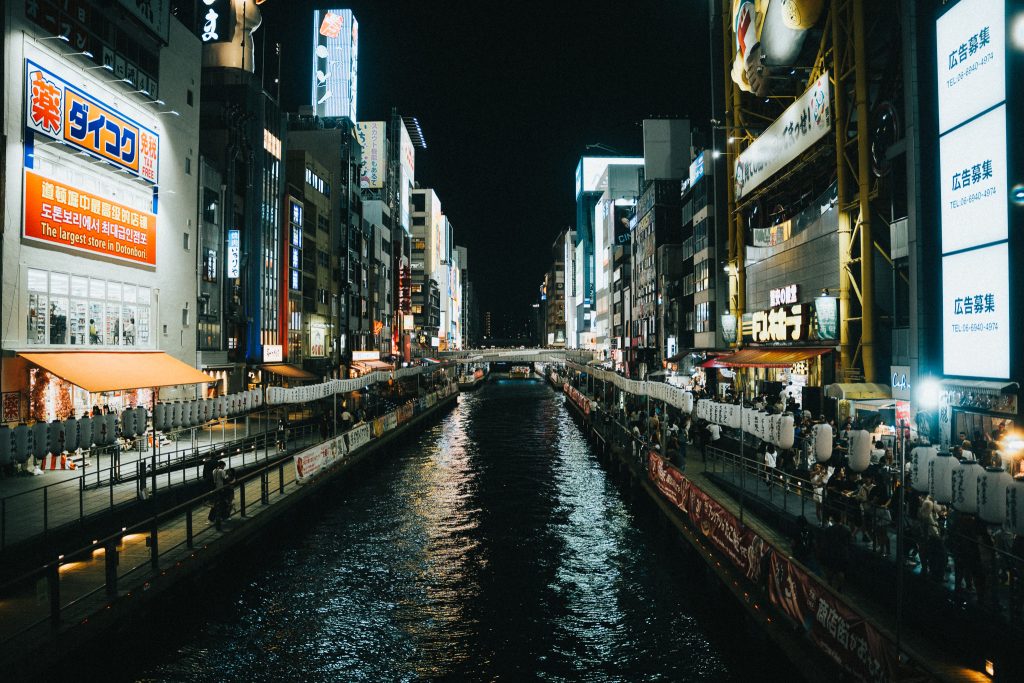
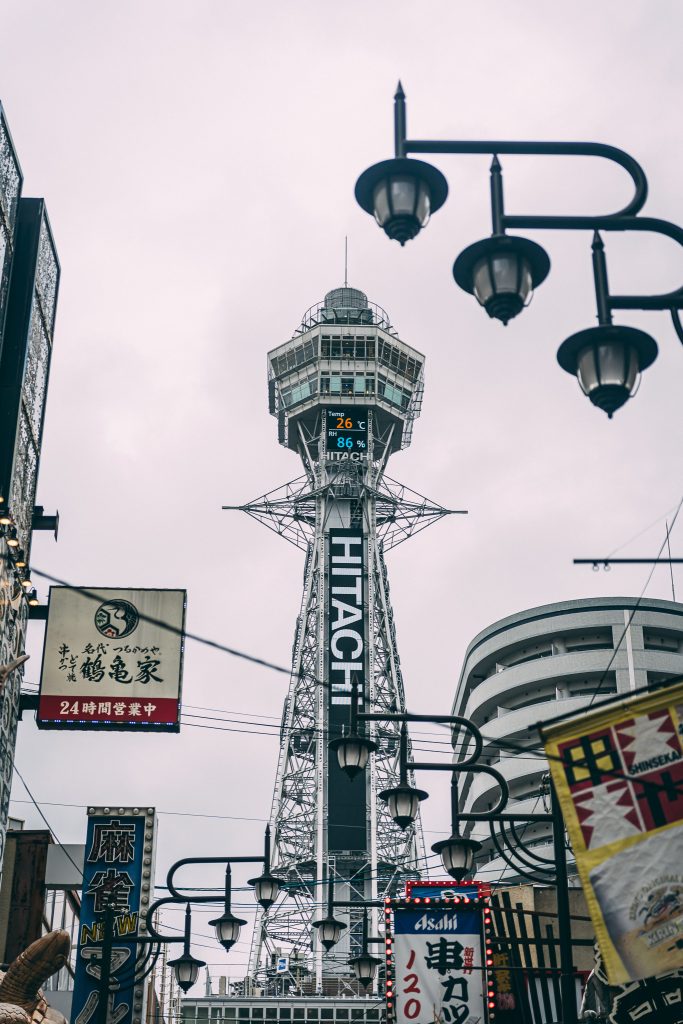
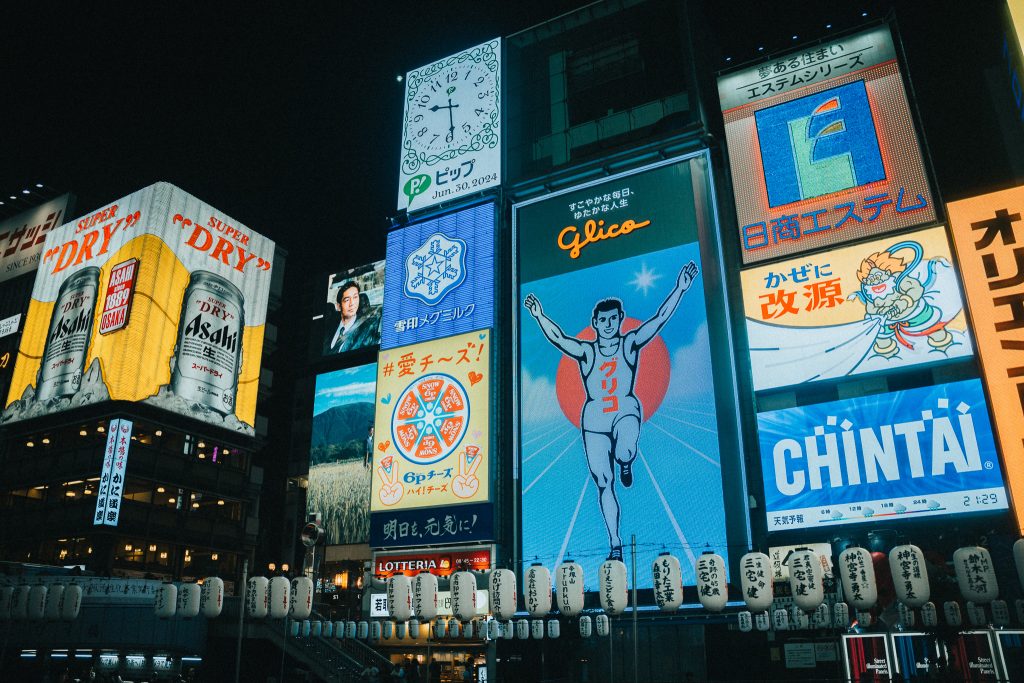
The legal drinking age is 20, and drinking is woven into social routines rather than treated as an event. One of the city’s most distinctive traits is what Hiro calls the “Osaka conversation.” Influenced by the city’s strong comedy culture, interactions tend to be lively and playful. Even strangers seated next to each other at a bar counter will often begin joking and connecting within minutes, turning ordinary encounters into memorable exchanges.
The Food
Food is inseparable from Osaka’s drinking culture. Often referred to as the Kitchen of Japan, the city approaches hospitality through flavor, generosity, and shared enjoyment. Bars rarely exist without food, and nights out almost always end with something to eat, whether it is shared snacks, small plates, or a full meal.
Street food plays a central role. Takoyaki and kushikatsu are staples, frequently eaten between drinks or late at night from small stands. These quick bites are not just fuel; they are social anchors, places where conversations continue and nights reset before carrying on elsewhere.
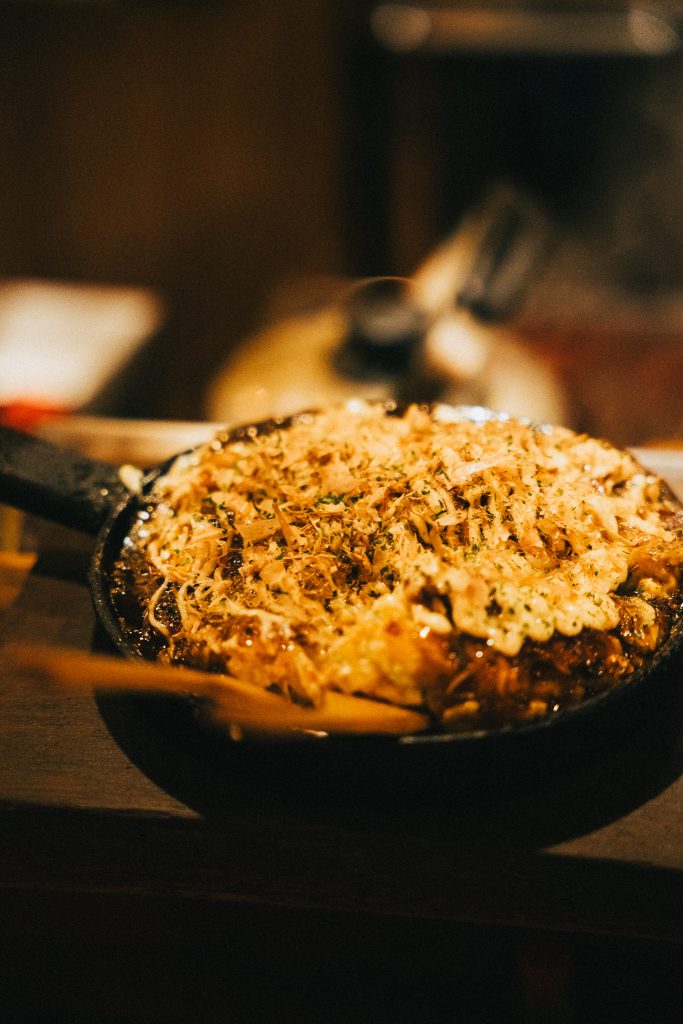
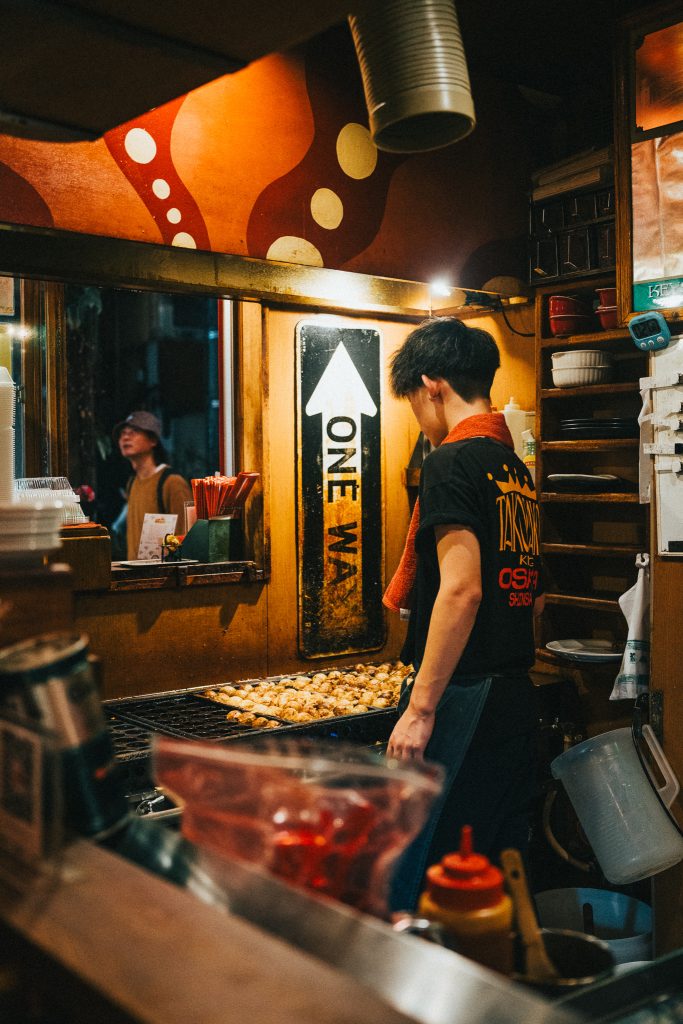
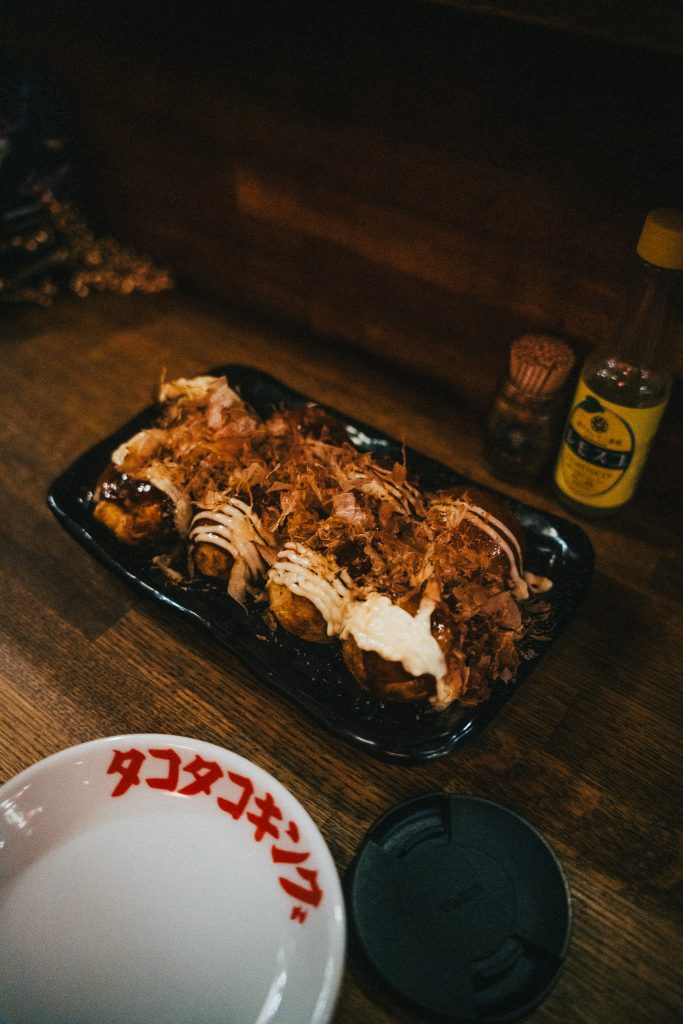
Signature dishes like okonomiyaki reflect the city’s hands-on, communal spirit, often cooked on shared griddles and eaten together. Even more adventurous options, such as raw chicken, reflect Osaka’s comfort with bold flavors and trust in local craftsmanship. In this city, food and drinks move together, guided by curiosity and appetite rather than rules.
The Drinks
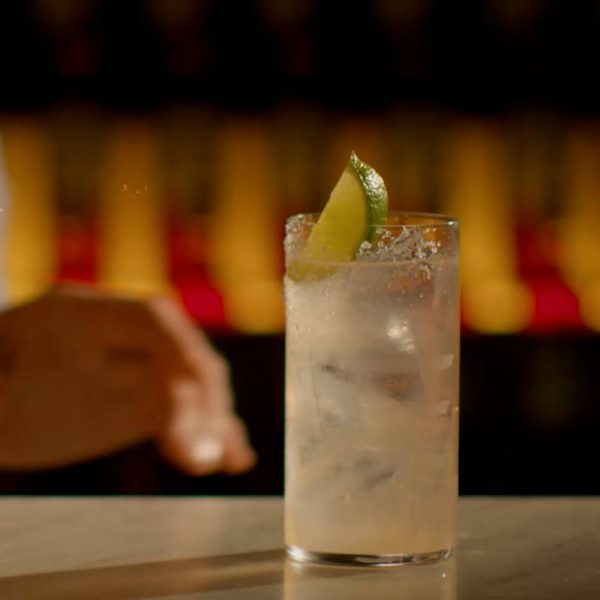
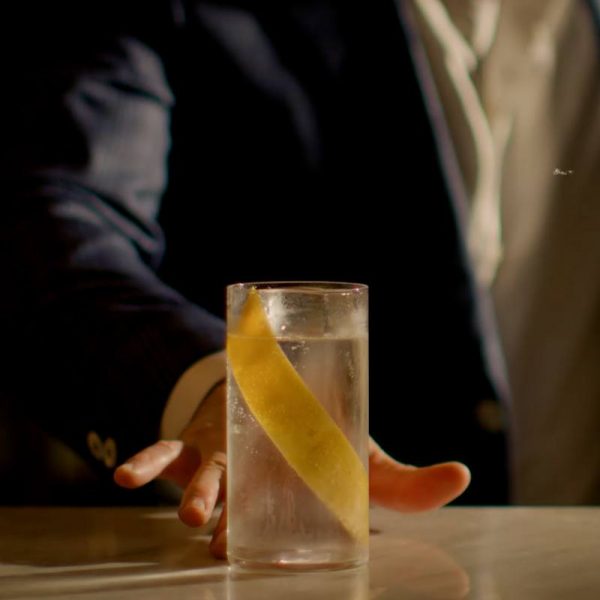
Osaka’s traditional drinking culture is built on familiar foundations. Beer, sake, shochu, and highballs dominate izakaya menus and casual bars across the city. Highballs and chuhai, typically made with shochu and soda, are especially popular for their lightness and ease, fitting seamlessly into long, social evenings.
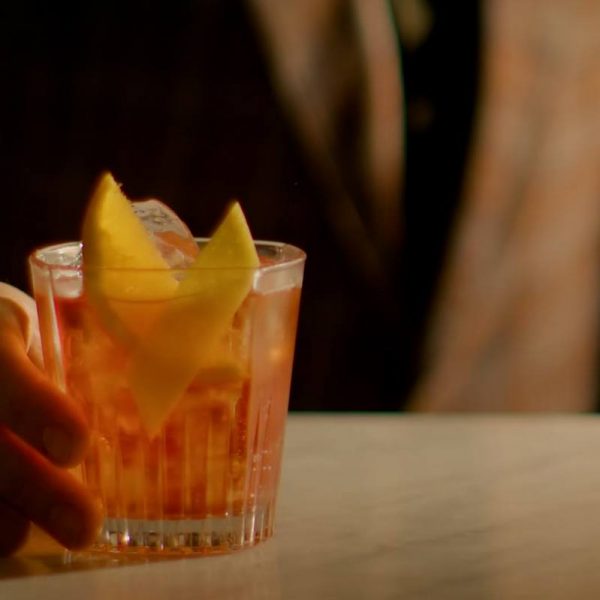
While these classics remain central, cocktail culture has been steadily growing. In areas like Amemura and Namba, creative cocktails appear alongside traditional offerings, reflecting a younger, more experimental crowd. Ura-Namba, by contrast, leans into retro izakaya-style drinks, preserving a sense of nostalgia through simpler serves and familiar flavors.
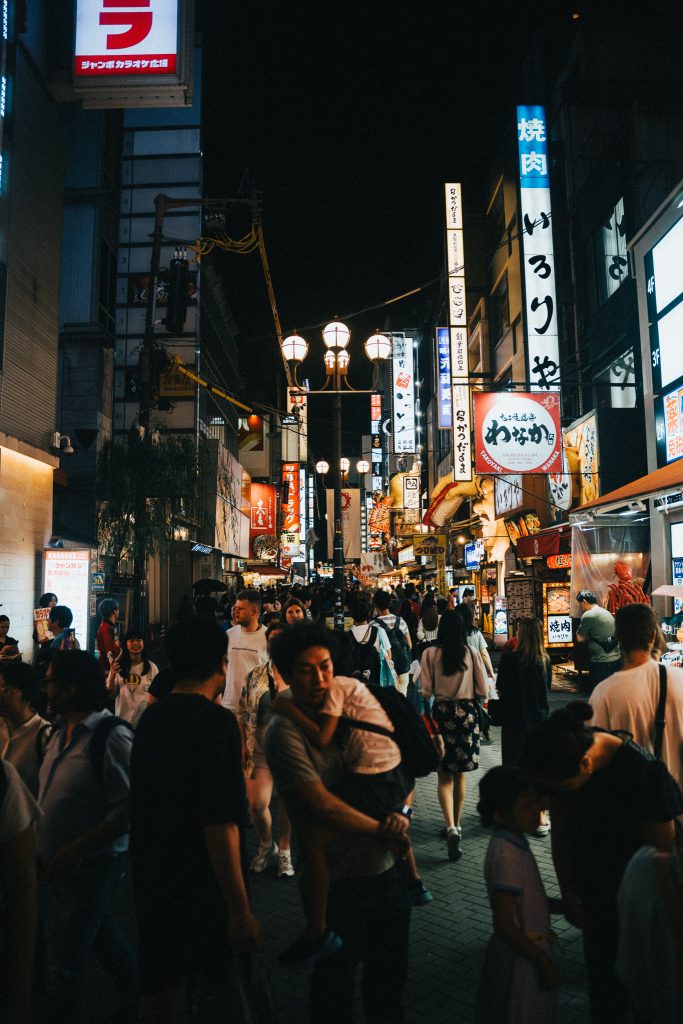
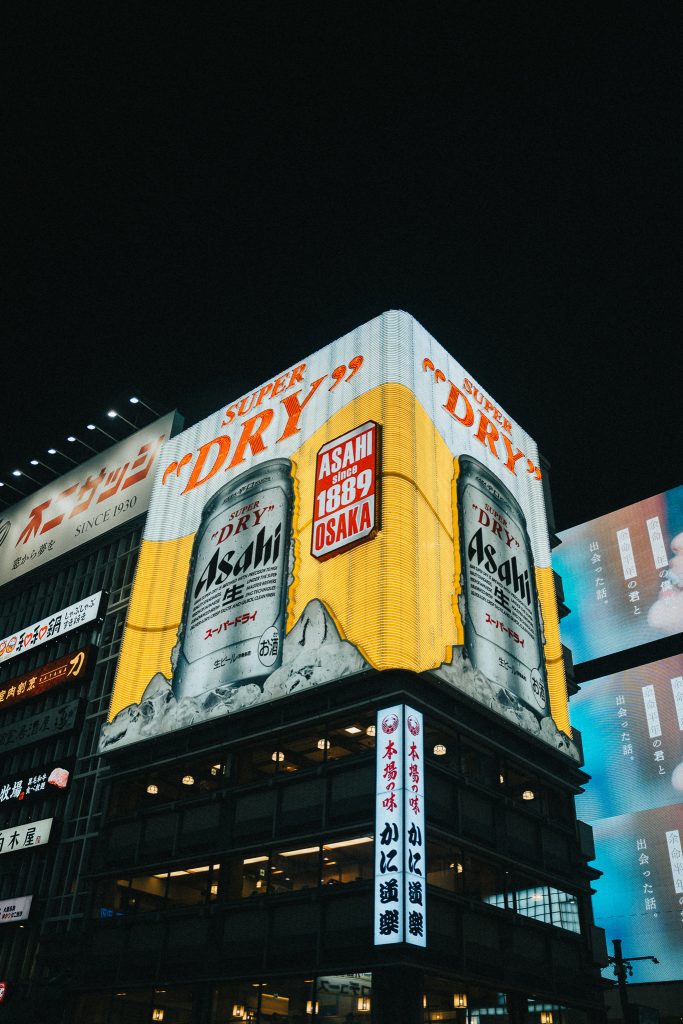
For visiting bartenders, inspiration extends beyond bars. Osaka’s neighborhoods each reveal a different layer of the city. The maze-like alleys of Ura-Namba showcase dense, local drinking culture. Tenma’s streets are lined with sake-focused spots. Nakatsu offers a more creative, underground energy. Shinsekai delivers raw, unfiltered local life, while Kita-Shinchi presents world-class hospitality in a more formal setting. America-mura, or Amemura, ties everything together with street culture and individuality.
The Big List
CAFES
- Lilo Coffee
- ISTA Coffee Element
BARS / COCKTAIL BARS
- Craftroom
- Bible Club
- Cane’s and Tales
- BOTA
- Gucci Bar
RESTAURANTS
- Qui Feu Qui
- MILPA
MARKETS / EXPERIENCES
- Douguya Suji (kitchen and bar tools street)
Tips & Phrases
Tipping culture
No tipping. Service is included in the price. A sincere thank you is always appreciated.
Getting around
Public transport is the best option. Trains, subways, and walking make it easy to move between areas like Shinsaibashi and Namba. For travel between the southern and northern districts, taxis are efficient and usually a short ride.
Legal drinking age
20 years old.
Where to stay
Namba and Shinsaibashi offer easy access to nightlife and walkable neighborhoods. Yodoyabashi is a good option for those planning to explore both the northern and southern areas.
Useful phrases
- Cheers: Kanpai
- Thank you: Ookini / Arigato
- Hi: Konnichiwa or simply “hi”
- Nice to meet you: Oai dekite ureshii desu
- Goodbye: Matane
More Articles
Article
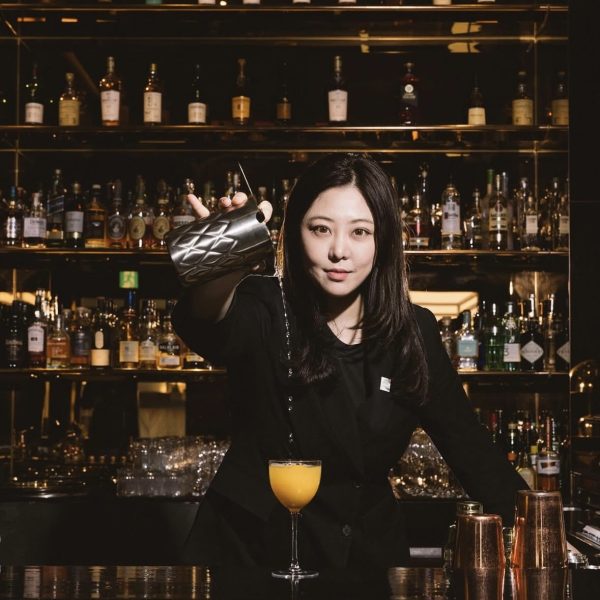
The future is yours to create: So-yeon Kim (Alice)So-yeon Kim, also known as Alice, is a bartender based in South Korea whose approach to hospitality is rooted in emotional awareness and quiet observation. Drawn to bartending through curiosity rather than convention, she sees cocktails as moments shaped by memory, mood, and human connection. As a Campari Red Hands APAC 2025 finalist for South […]
Article
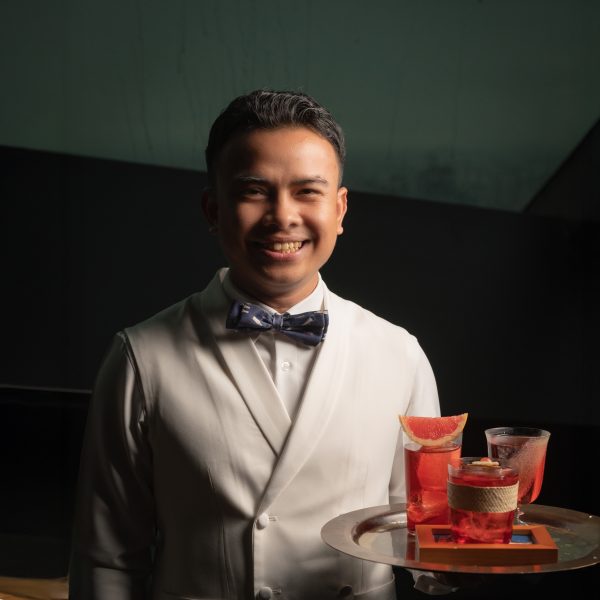
The future is yours to create: Phirun LekPhirun Lek is a lead bartender at SORA Phnom Penh, a venue that marked both the beginning and the foundation of his bartending career. Starting in hospitality through service roles before finding his place behind the bar, his journey reflects steady growth shaped by curiosity, practice, and people. With a mindset rooted in learning and […]

Article
Drink Like a Local: Macau with Frankie LeongExplore Macau with Frankie Leong, to discover a compact city where Chinese and Portuguese cultures meet through layered histories, late-night rituals, comfort-driven food, and a quietly evolving cocktail scene. Macau is often described through contrast: a city shaped by centuries of exchange between East and West, where Chinese traditions and Portuguese heritage coexist in daily […]
Article
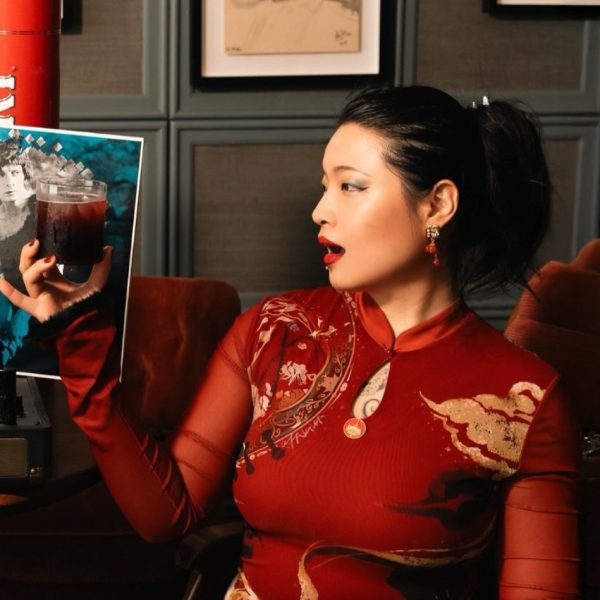
The future is yours to create: Liu Yuan (Kim)Liu Yuan, also known as Kim, is a bartender at Wing Lei Bar in Macau whose journey into hospitality began with curiosity rather than convention. Drawn into the world of cocktails through a single, formative experience, she approaches bartending with a balance of discipline, creativity, and openness to discovery. As the first bartender from Macau […]
Article
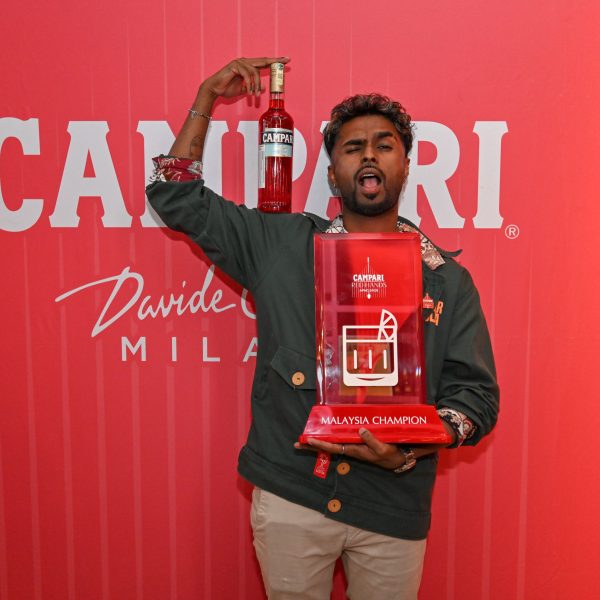
The future is yours to create: Thanesh JoelThanesh Joel is a bartender whose relationship with hospitality is shaped less by ambition and more by curiosity. Based in Penang and deeply rooted at Backdoor Bodega, his work reflects a mindset driven by understanding, of flavour, systems, and human behaviour. As the Campari Red Hands APAC 2025 finalist for Malaysia, he approaches competition not […]

Article
The future is yours to create: Hiroyuki YamadaHiroyuki Yamada is a bartender at Bee’s Knees in Kyoto, whose path into hospitality began quietly during his student years. What started as a part-time job at an izakaya became a long-term commitment to service, shaped by daily human interaction and cultural exchange. As the Campari Red Hands APAC 2025 finalist for Japan, he approaches […]
Discover More
Article
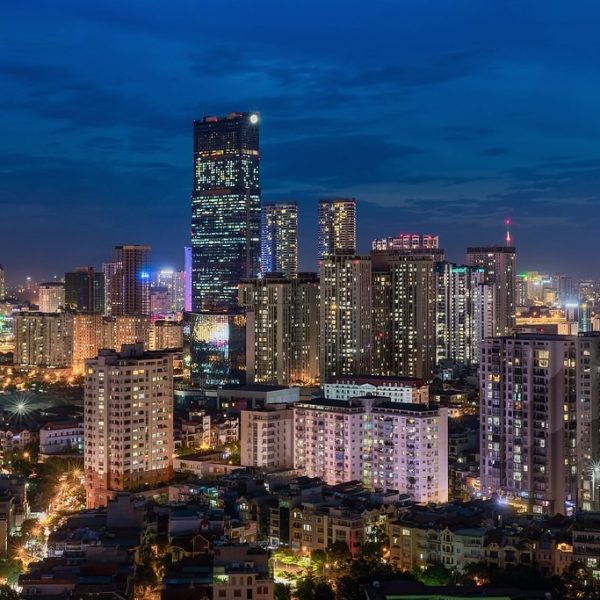
Drink Like A Local: Hanoi with Công NguyễnDiscover Hanoi through Công’s eyes, a city where nostalgia and creativity intertwine, where mornings hum with the clatter of coffee cups and evenings glow with the warmth of shared laughter over bia hơi and cocktails alike. Born and raised in Hanoi, Công Nguyễn has spent over a decade behind the bar, shaping not only his […]
Article
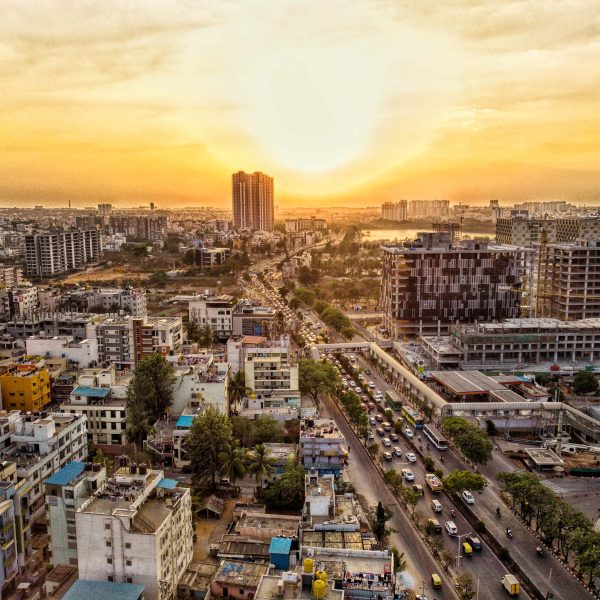
Drink Like a Local: Bengaluru with Rajib MukherjeeExplore Bengaluru with Rajib, uncovering a city where innovation thrives beside nature, where bar culture evolves every year, and where food traditions run deep. Wander through tree-lined neighborhoods, taste the city’s legendary comfort dishes, and experience a nightlife shaped by creativity, craft, and community. Set on the elevated Deccan Plateau, Bengaluru, India’s Garden City, is […]
Article
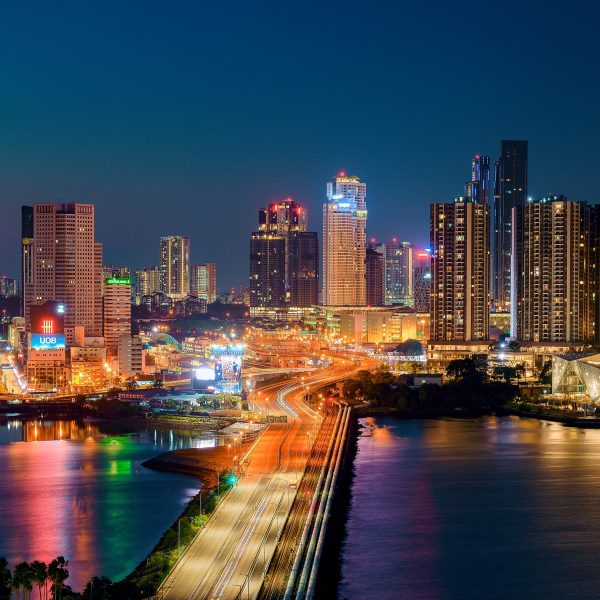
Drink Like A Local: Johor Bahru with Joe NaikExplore Johor Bahru with Joe, to uncover a city where coastal calm meets electric energy, where late-night food stalls glow beside modern bars, and every corner hums with the warmth of Malaysian hospitality. Discover the easy rhythm of local life, taste the flavors that define its streets, and experience the city’s growing cocktail culture through […]
Article
Drink Like a Local: Macau with Frankie LeongExplore Macau with Frankie Leong, to discover a compact city where Chinese and Portuguese cultures meet through layered histories, late-night rituals, comfort-driven food, and a quietly evolving cocktail scene. Macau is often described through contrast: a city shaped by centuries of exchange between East and West, where Chinese traditions and Portuguese heritage coexist in daily […]
Article
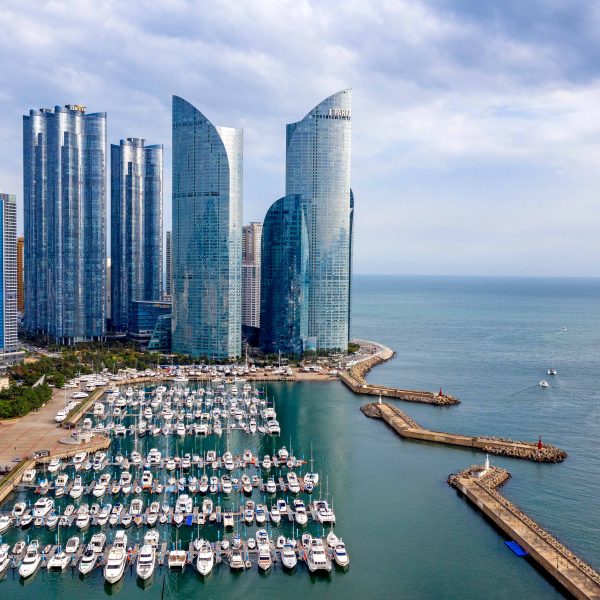
Drink Like a Local: Busan with Jo Minseok (JoJo)Explore Busan with Jo Minseok (JoJo), to discover a city driven by passion and contrast, where ocean air, deeply rooted food culture, and a fast-evolving bar scene come together through the eyes of a local bartender determined to elevate his hometown. Set between mountains and sea, Busan moves at a rhythm unlike anywhere else in […]
Article
The Future is Yours to Create: Christina ChaeMeet the fourth interviewee in our new series: Christina Chae, co-owner of plant cocktail bar, Moonflower, in Portage Park, Chicago. She talks about creating safe spaces, not looking at each other as competition, and leading by example A little bit about me I’ve had many odd jobs as a young adult, but when I started hosting […]